Roast Dinners – Composition Overview
Published February 2026
Introduction
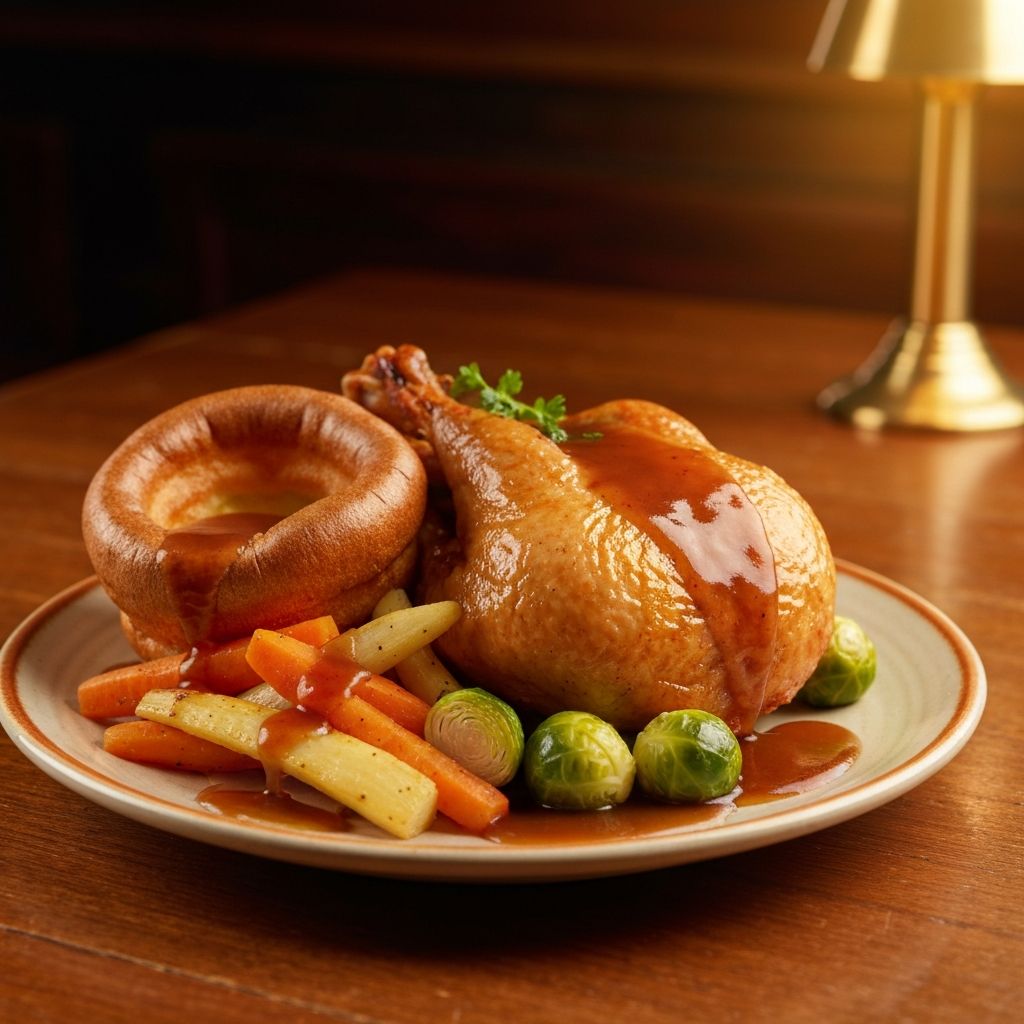
The roast dinner (or Sunday roast) represents one of the most iconic and significant meal traditions in British culture. A complete roast dinner is a multi-component meal that brings together proteins, vegetables, starchy sides, and sauces into a traditional presentation. Understanding the composition of roast dinners—the typical components, portion sizes, and preparation methods—provides important context for how these meals contribute to overall nutritional intake in British dining culture.
Historical and Cultural Context
The Sunday roast has been central to British dining culture for centuries, traditionally prepared at home on Sunday afternoons and increasingly featured in pub and restaurant menus as a nostalgic or heritage offering. The meal represents both a culinary tradition and a social occasion, typically a large, leisurely meal shared with family.
Contemporary roast dinners in pub and restaurant settings follow traditional patterns while sometimes incorporating modern variations or contemporary ingredients alongside classic components.
Core Components of a Traditional Roast Dinner
A complete roast dinner typically includes several essential components, though variations exist depending on the specific roast being served.
Roasted Meat
The primary protein component of a roast dinner is a large piece of meat, roasted whole or in large sections. Common roast options in British restaurants include:
- Beef roast: Prime cuts such as rib or sirloin roasted to medium or rare, sliced for serving
- Pork roast: Often with crackling skin, providing textural contrast
- Lamb roast: Leg or shoulder cuts, often with garlic and rosemary
- Chicken roast: Whole bird or large portions, sometimes with stuffing
- Turkey roast: Less common in pub settings except around holiday seasons
- Game meats: Pheasant, duck, or venison in upscale establishments
Portion and energy characteristics of roasted meat:
- Typical serving of roasted meat: 150-200g
- Beef roast (medium): Approximately 200-280 calories per 100g
- Pork roast: Approximately 160-240 calories per 100g depending on cut and fat content
- Lamb roast: Approximately 200-300 calories per 100g (often fattier than beef)
- Chicken roast: Approximately 120-180 calories per 100g depending on skin removal
Roasting typically involves minimal added fat beyond the meat's natural fat content, though the meat is often cooked in its own juices or with oil applied to the exterior. The energy content is primarily determined by the meat's natural fat percentage and the cut selected.
Yorkshire Puddings
Yorkshire puddings are a nearly ubiquitous component of British roast dinners, particularly when beef is served. These are made from a batter of eggs, flour, and milk, cooked in hot oil or beef fat to create a puffed pastry-like component.
Composition and energy characteristics:
- Typical Yorkshire pudding (one small): Approximately 100-150 calories
- Larger serving (two or three puddings): Approximately 200-450 calories
Yorkshire puddings derive their energy from fat (oil or beef fat used for cooking), flour, eggs, and dairy. They are energy-dense compared to vegetables but typically comprise a smaller portion of the total meal by weight.
Roasted Potatoes
Roasted potatoes are a standard component, prepared by cutting potatoes into chunks, coating with oil and herbs, then roasting in an oven until golden and crispy.
Energy characteristics:
- Typical serving: 150-200g
- Energy content: Approximately 210-320 calories
Roasted Vegetables
Roasted vegetables typically include root vegetables and other available vegetables, prepared similarly to roasted potatoes.
Common roasted vegetables:
- Carrots
- Parsnips
- Onions
- Beetroot
- Turnips
- Mushrooms
- Courgettes
Energy characteristics of roasted vegetables:
- Typical combined serving: 150-200g of multiple vegetables
- Energy content: Approximately 150-250 calories depending on oil quantity and vegetable types
Gravy
Gravy made from meat drippings is an essential component of roast dinners, served generously over the meat and other components.
Energy characteristics:
- Typical serving: 100-150ml
- Energy content: Approximately 50-150 calories depending on fat content and thickness
Additional Vegetables
Beyond roasted vegetables, fresh or lightly cooked vegetables such as peas or steamed greens are often included.
Energy characteristics:
- Fresh or steamed vegetables (100-150g): Approximately 40-80 calories
Composition of a Complete Roast Dinner
A traditional roast dinner brings together multiple components in a single meal. The following table illustrates a typical composition:
| Component | Typical Portion | Approximate Energy (kcal) |
|---|---|---|
| Roasted meat (beef, lamb, or pork) | 175g | 350-500 |
| Yorkshire puddings (2-3) | 100-150g | 200-350 |
| Roasted potatoes | 150g | 210-320 |
| Roasted vegetables (mixed) | 150g | 150-250 |
| Fresh vegetables (peas, greens) | 100g | 40-80 |
| Gravy | 150ml | 75-150 |
| Typical total roast dinner energy: | 1,025–1,650+ kcal | |
A complete roast dinner, as served in a restaurant or pub, typically ranges from approximately 1,000-1,700 calories, though variations exist based on specific ingredients, portion sizes, and preparation methods.
Factors Affecting Energy Density of Roast Dinners
Meat cut and fat content: Fattier cuts (such as lamb or rib beef) contain more energy than leaner options. Chicken roasts with skin have more energy than those with skin removed.
Oil used in roasting: The amount of oil or fat used when roasting potatoes and vegetables significantly affects their final energy content. Generous oil application substantially increases energy density.
Yorkshire pudding preparation: These vary from light, airy puddings to denser preparations, affecting their energy contribution.
Gravy composition: Gravy made from high-fat meat drippings is more energy-dense than gravy made from leaner sources or thickened with higher vegetable content.
Portion sizes: Restaurant portions of roast components vary considerably, affecting total energy. A "standard" serving of roasted meat may range from 150-250g.
Nutritional Profile of Roast Dinners
Beyond total energy, roast dinners provide specific nutritional profiles:
- Protein: Substantial from the meat component (approximately 40-70g in a typical roast)
- Fat: Significant, from meat and oils used in cooking roasted components
- Carbohydrates: Primarily from potatoes and Yorkshire puddings
- Fiber: From roasted and fresh vegetables, though limited relative to other nutrient content
- Micronutrients: Varied, including iron from meat and vitamins from vegetables
Variations in Roast Dinners
While the traditional roast dinner follows established patterns, variations exist:
- Vegetarian roasts: Meat replaced with plant-based proteins (nuts, lentils, vegetables)
- Contemporary gastropub versions: May feature updated preparations, additional vegetables, or reduced portions of traditional starchy sides
- Heritage or "proper" roasts: Emphasizing traditional preparation and larger portions
- Lighter versions: Reduced gravy, additional vegetables, smaller meat portions
Roast Dinners in Contemporary Pubs and Restaurants
Roast dinners remain popular offerings in British pubs and restaurants, though their context has changed from historic home preparation to a dining experience. Many establishments offer Sunday roasts as a specific menu feature, often at a set price and with limited menu selection.
The roast dinner represents a complete meal in itself—unlike many restaurant mains that might be accompanied by separately-ordered sides, a roast dinner is traditionally presented as a unified composition with all components included.
Conclusion
The roast dinner is a complex, multi-component meal that brings together proteins, starchy carbohydrates, vegetables, and sauces in a traditional British presentation. A typical roast dinner ranges from approximately 1,000-1,700 calories depending on ingredient selection, portion sizes, and preparation methods. Understanding the composition of this traditional meal—including how different components contribute to overall energy and nutrient content—provides important context for how restaurant meals are structured and how they contribute to overall nutritional intake in British dining culture.
This information is presented for educational understanding of meal composition and food preparation, not as guidance for individual meal choices or dietary decisions.