An educational exploration of typical British pub and restaurant dishes, their preparation methods, and general nutritional characteristics.
British pubs and restaurants offer a wide variety of menu items, each with distinct characteristics in terms of preparation, ingredients, and overall nutritional composition. This site provides educational information about these common offerings, exploring how different cooking methods, ingredient combinations, and portion sizes influence the energy density and macronutrient profiles of typical dishes.
Understanding the composition of menu items is important for general knowledge about food and eating out. This information is presented in a neutral, informational context, reflecting data from standard nutritional databases and general UK public health awareness materials.
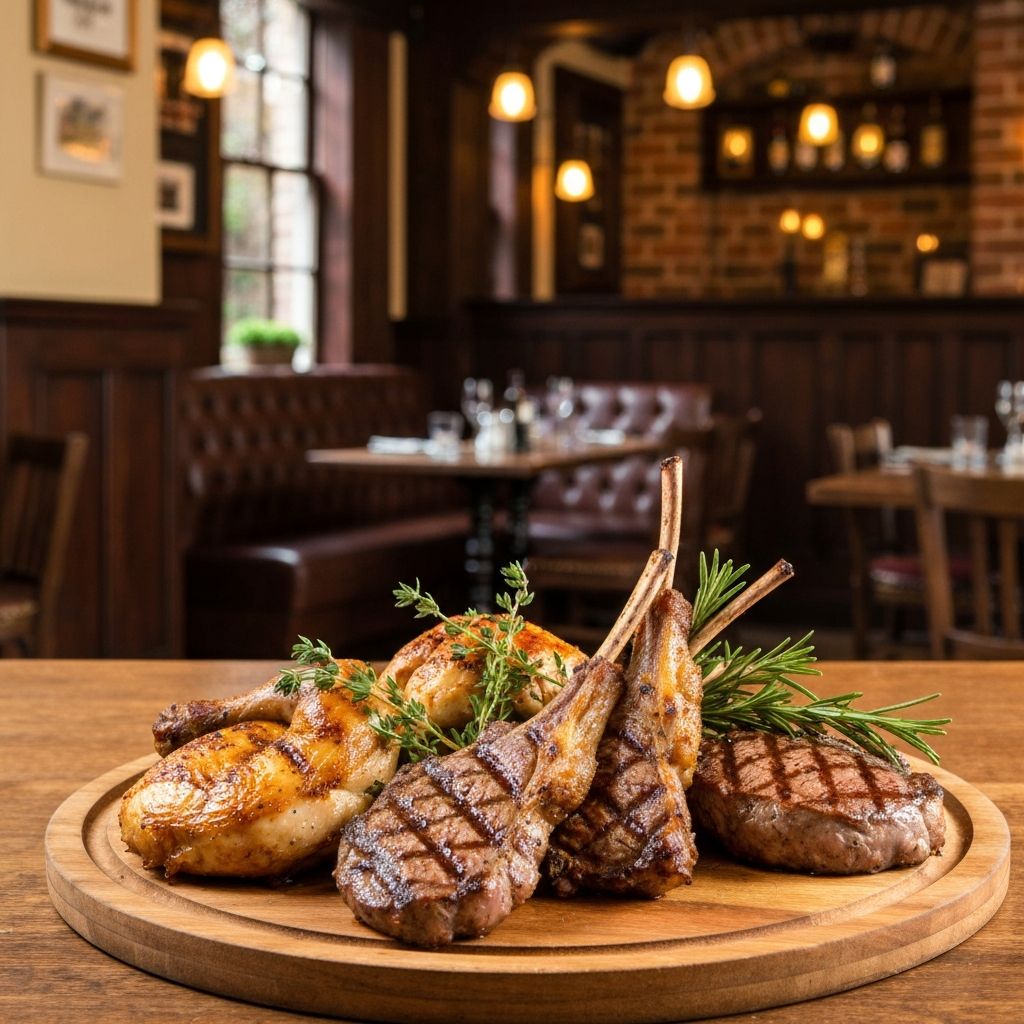
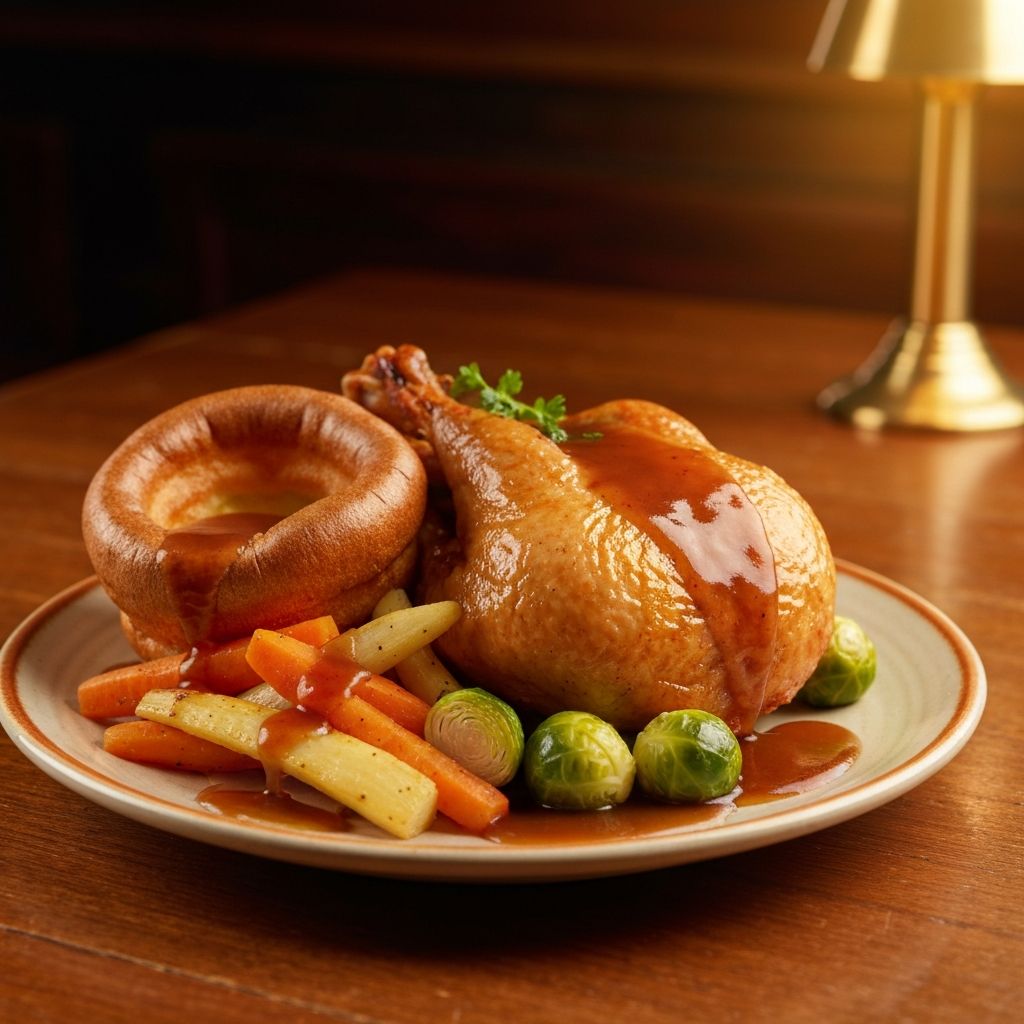
Grilled and roasted proteins are staple offerings in British pub and restaurant menus. These preparations involve cooking proteins such as beef steaks, chicken breasts, lamb chops, and pork over direct heat or in an oven, typically with minimal added fat compared to some other cooking methods.
Grilled dishes are commonly served with accompan iments such as seasonal vegetables, potatoes, rice, or bread. The cooking method influences the final nutritional profile, as grilling typically involves less added fat than deep-frying, though the total energy contribution depends on portion size, the cut of meat used, and the cooking fats applied.
Typical examples include steak with chips and salad, grilled chicken with roasted vegetables, and lamb chops served with bread.
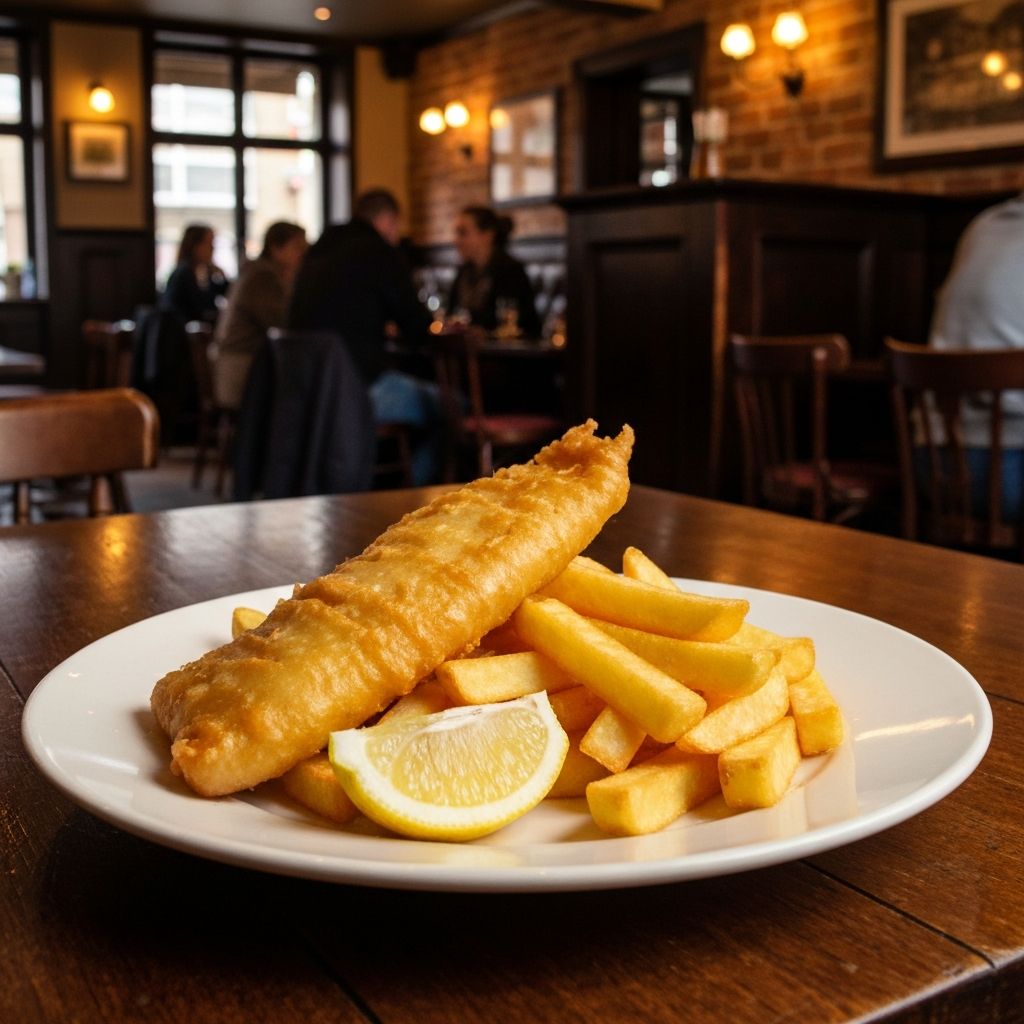
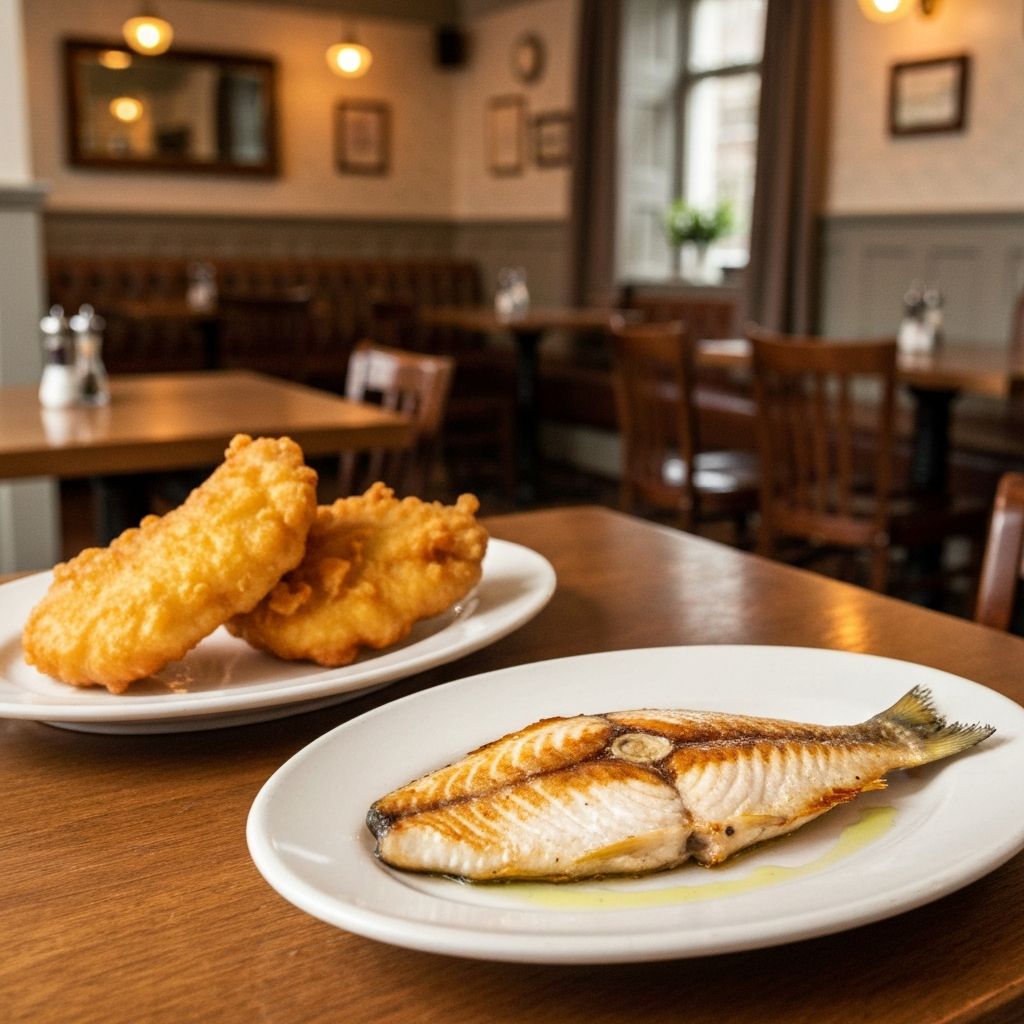
Fish is a common protein offering in UK pubs and restaurants, typically prepared in two main ways: grilled and battered. Grilled fish fillets, such as salmon, cod, or sea bass, are cooked with minimal added fat, often with lemon, herbs, and a light drizzle of oil.
Battered fish, traditionally cod or haddock, is dipped in a flour-based batter and deep-fried, significantly increasing the overall energy density compared to grilled preparations. The batter absorbs cooking oil, contributing additional fat and calories to the final dish.
Both preparations are commonly served with chips (thick-cut fried potatoes), peas, or salad. The energy contribution varies greatly depending on the cooking method, portion size, and accompanying items.
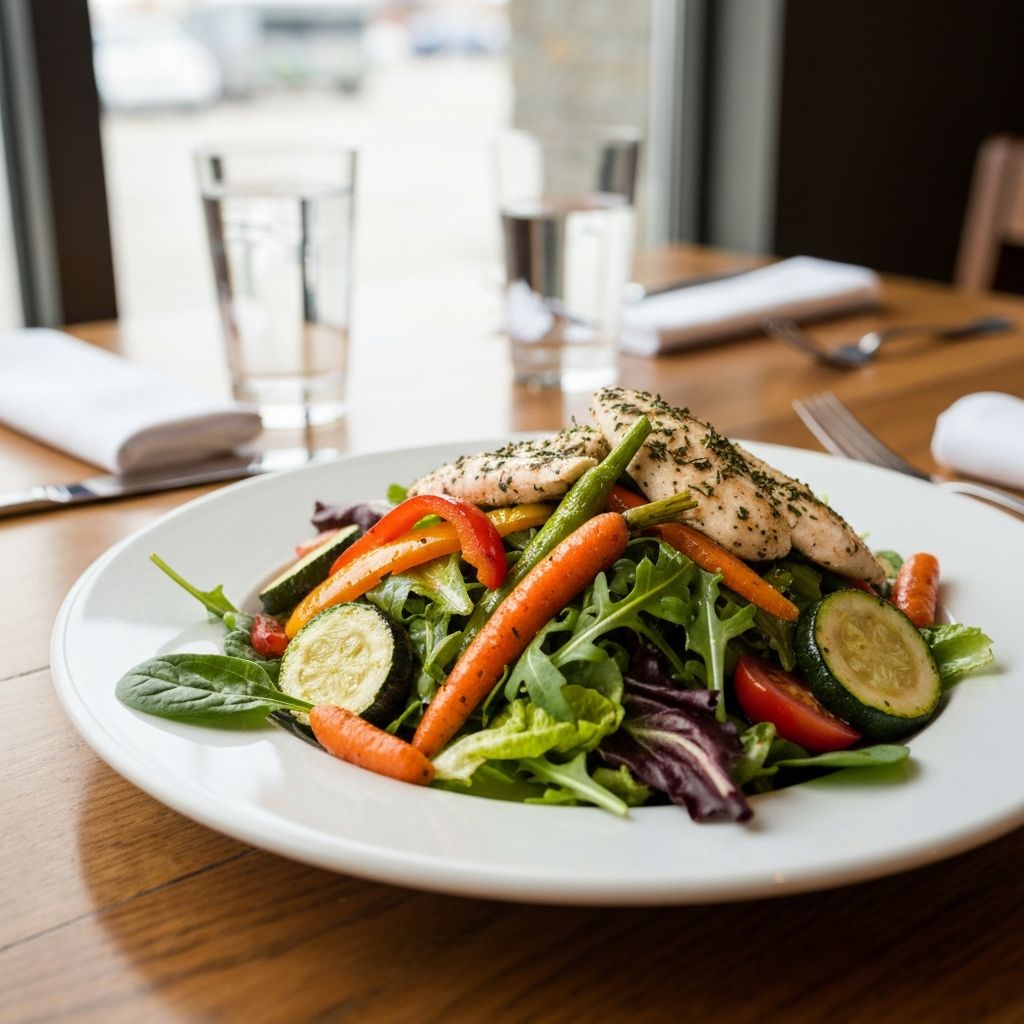
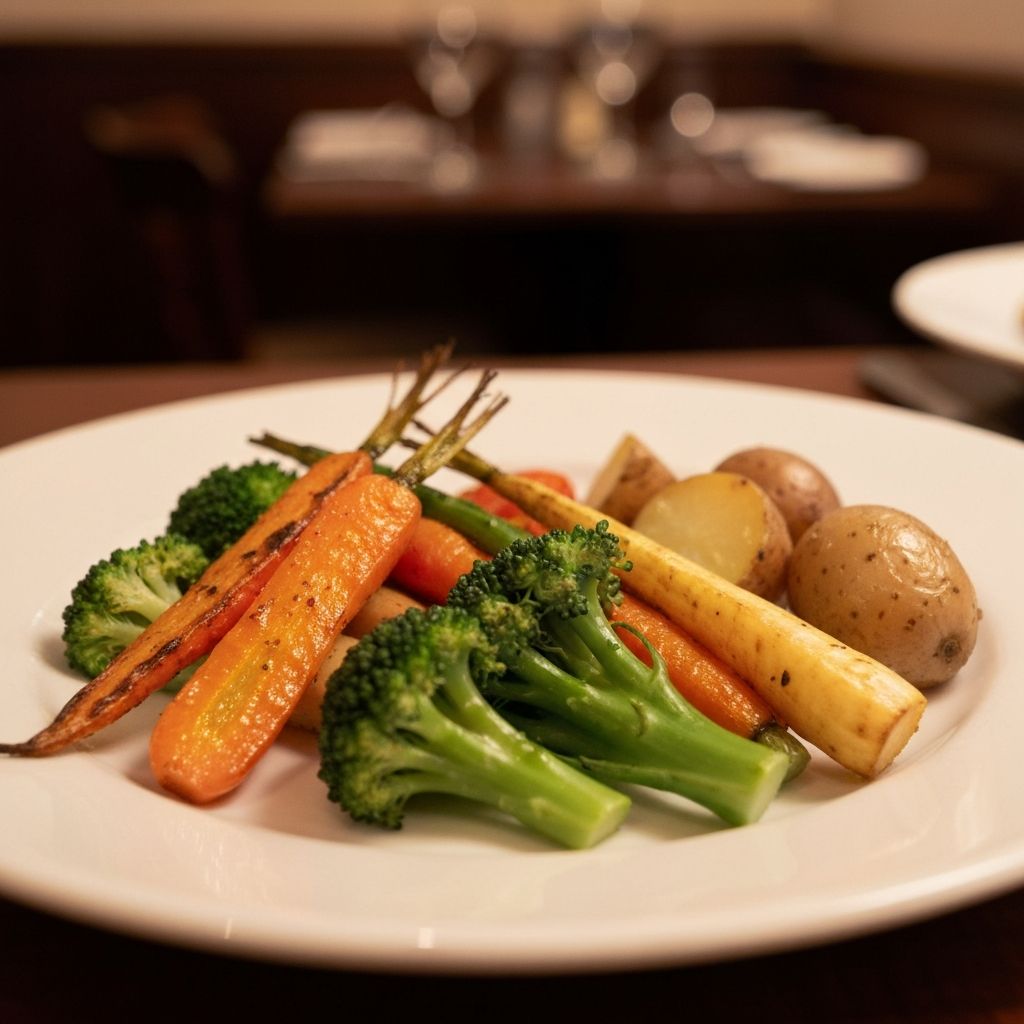
Vegetables appear in British pub and restaurant menus both as side dishes accompanying proteins and increasingly as main courses. Common vegetable sides include roasted root vegetables (carrots, parsnips, beets), steamed or sautéed greens (broccoli, spinach), and fresh or cooked salads.
Salads are offered in various forms, from simple mixed greens with dressing to more substantial preparations including proteins such as chicken, fish, or cheese. The energy density of salads depends heavily on the type and amount of dressing used, as well as the inclusion of proteins and other calorie-dense ingredients.
Roasted vegetables are often prepared with olive oil or butter, influencing their overall energy contribution. The combination of vegetables with grains, pulses, or proteins creates varied nutritional profiles.
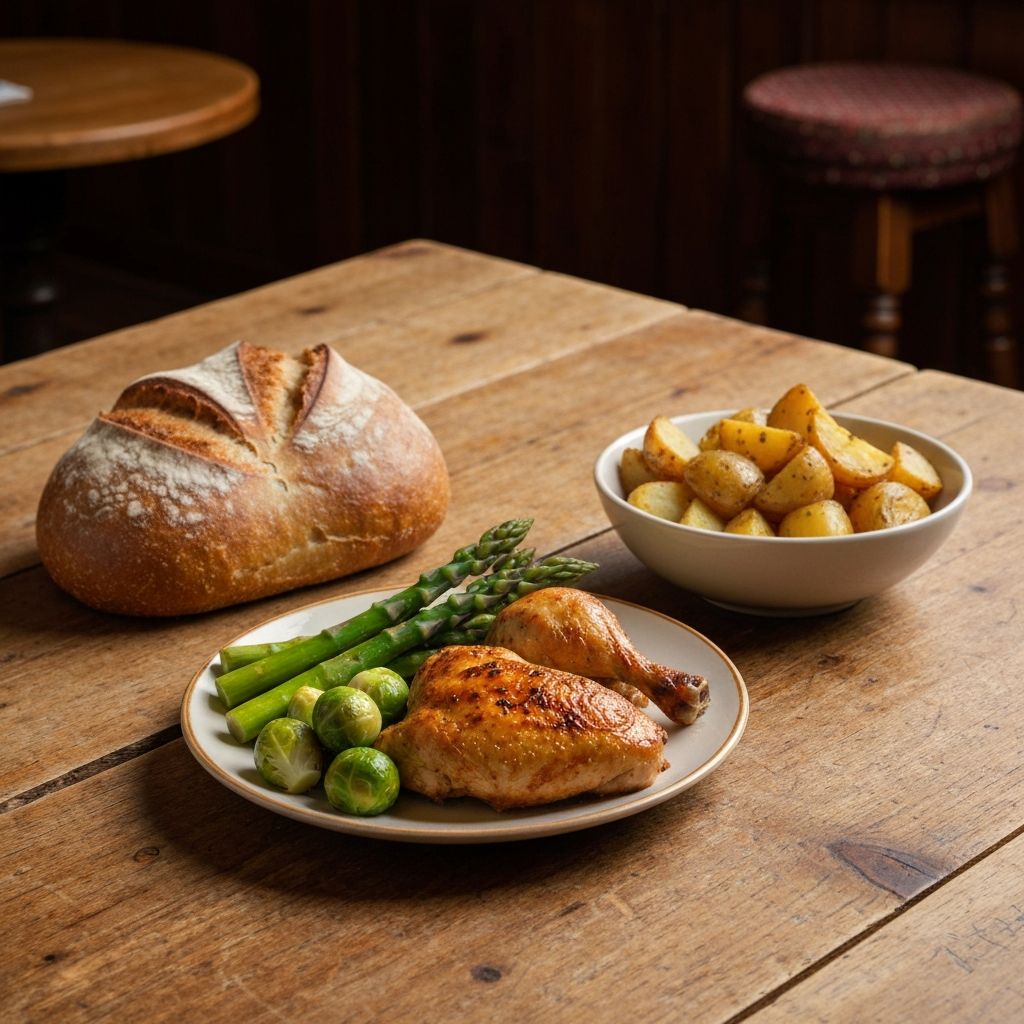
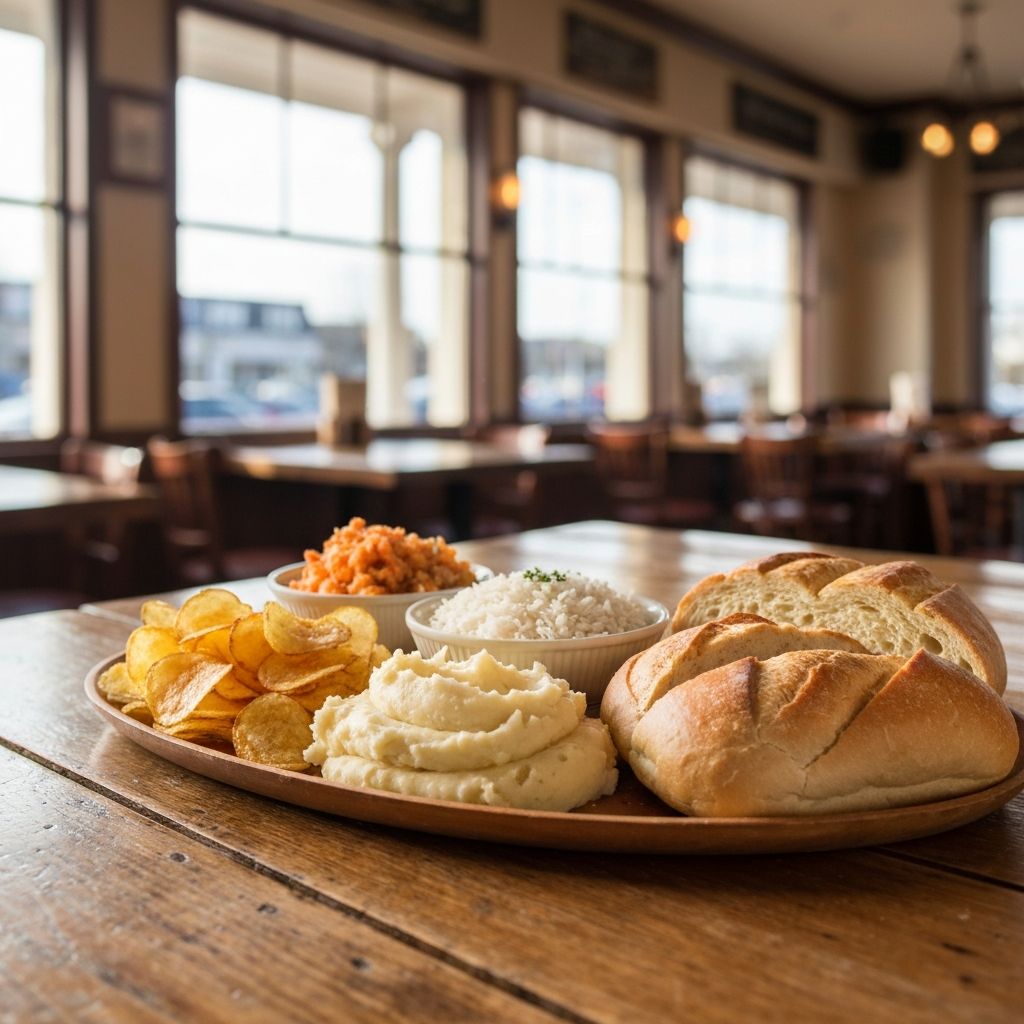
Starchy carbohydrates are fundamental components of British pub and restaurant meals. The following table compares common starchy side options in terms of typical energy density and preparation characteristics:
| Starchy Side | Typical Preparation | Energy Density Context | Common Accompaniments |
|---|---|---|---|
| Chips (Fries) | Thick-cut potatoes, deep-fried in oil | Higher energy due to absorption of frying oil | Salt, vinegar, served with fish or meat |
| Mashed Potatoes | Boiled potatoes mashed with butter and milk | Moderate to higher energy depending on butter/milk ratio | Often served with roasted meats and gravy |
| Rice | Boiled or pilau rice preparations | Lower energy density than fried rice; higher if prepared with oil/butter | Commonly served with curries or Asian dishes |
| Bread | Sliced white, brown, or granary bread | Moderate energy; varies by type and portion | Often buttered; served with soups or as bread baskets |
| Jacket Potatoes | Whole potatoes baked in oven | Lower energy preparation; depends on fillings (butter, cheese, beans) | Served with various fillings and toppings |
| Roasted Potatoes | Cubed potatoes roasted with oil and herbs | Moderate to higher depending on oil quantity | Part of roast dinners with meats and vegetables |
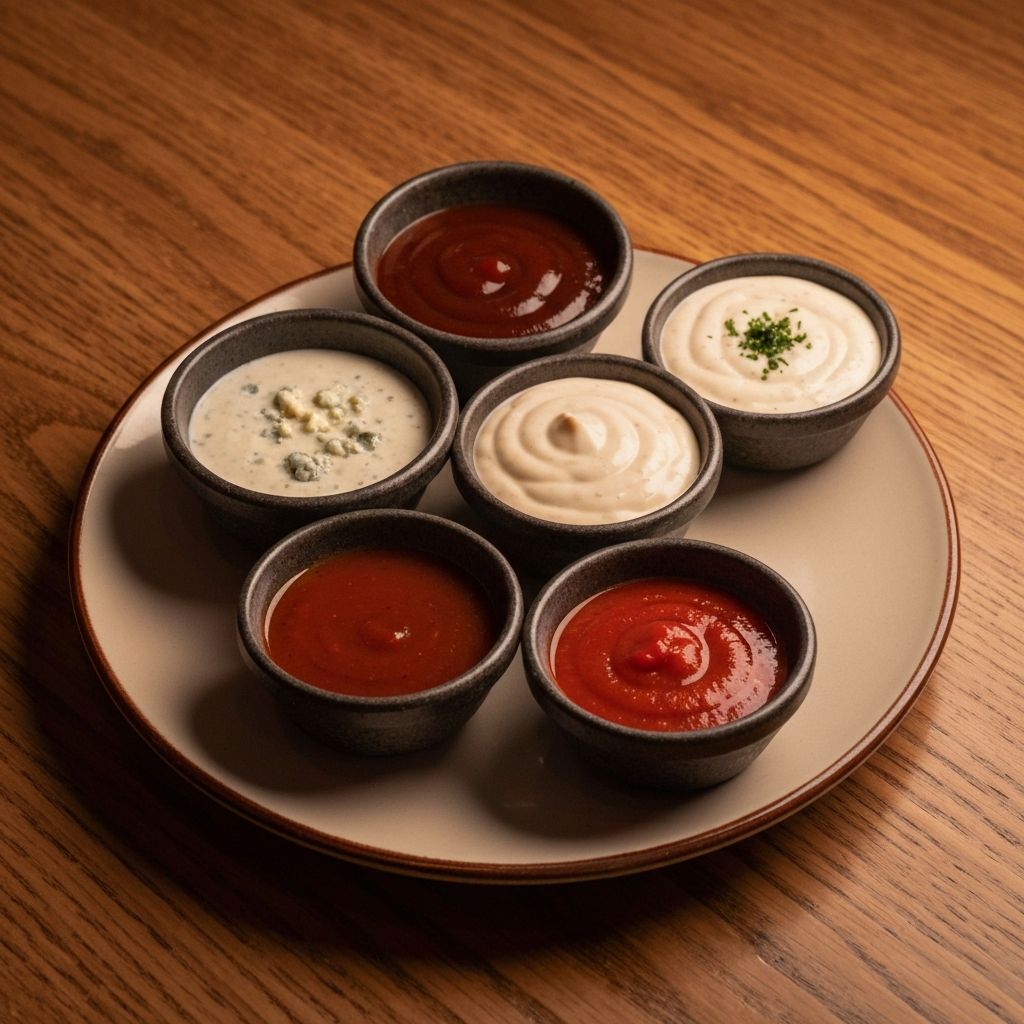
Sauces and dressings play a significant role in the overall composition of pub and restaurant meals. These condiments range from light, broth-based preparations to rich, cream-based sauces, each contributing different amounts of energy and nutrients to dishes.
Common sauce types include:
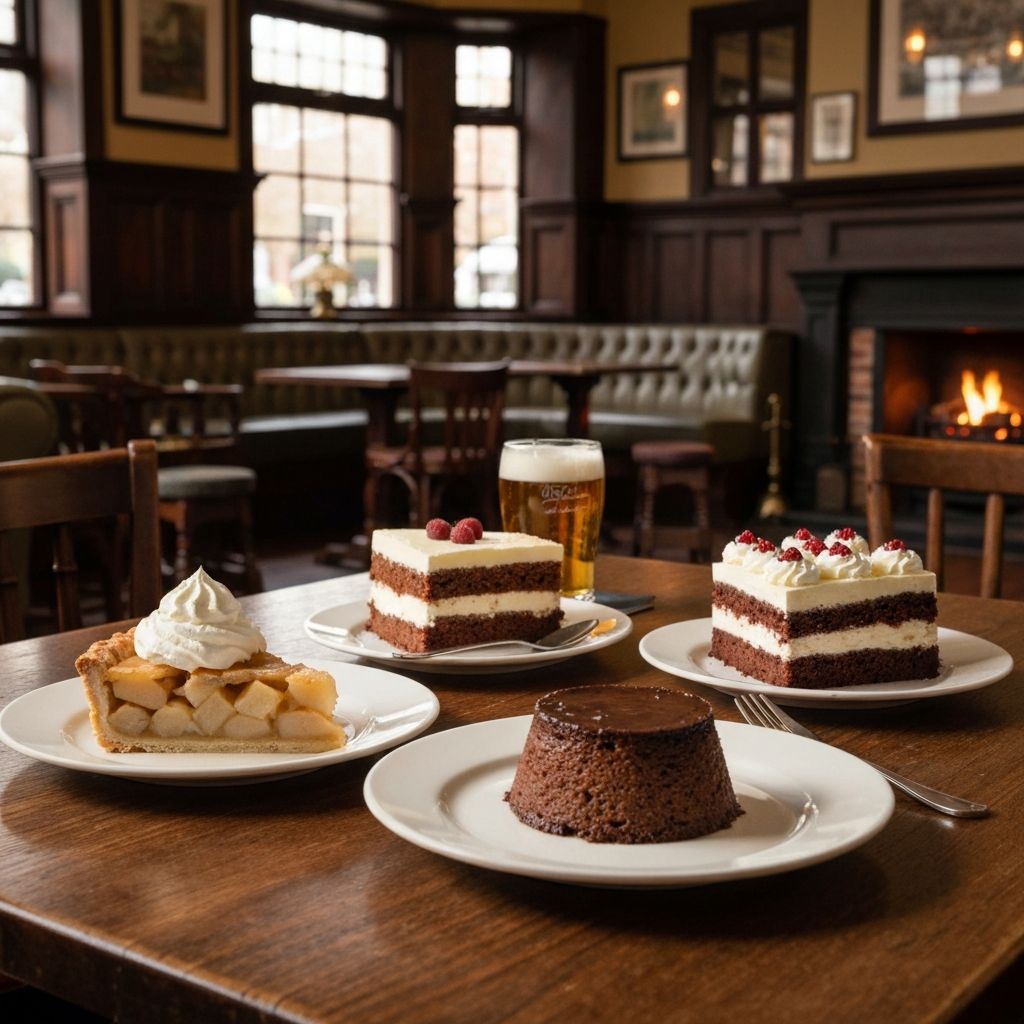
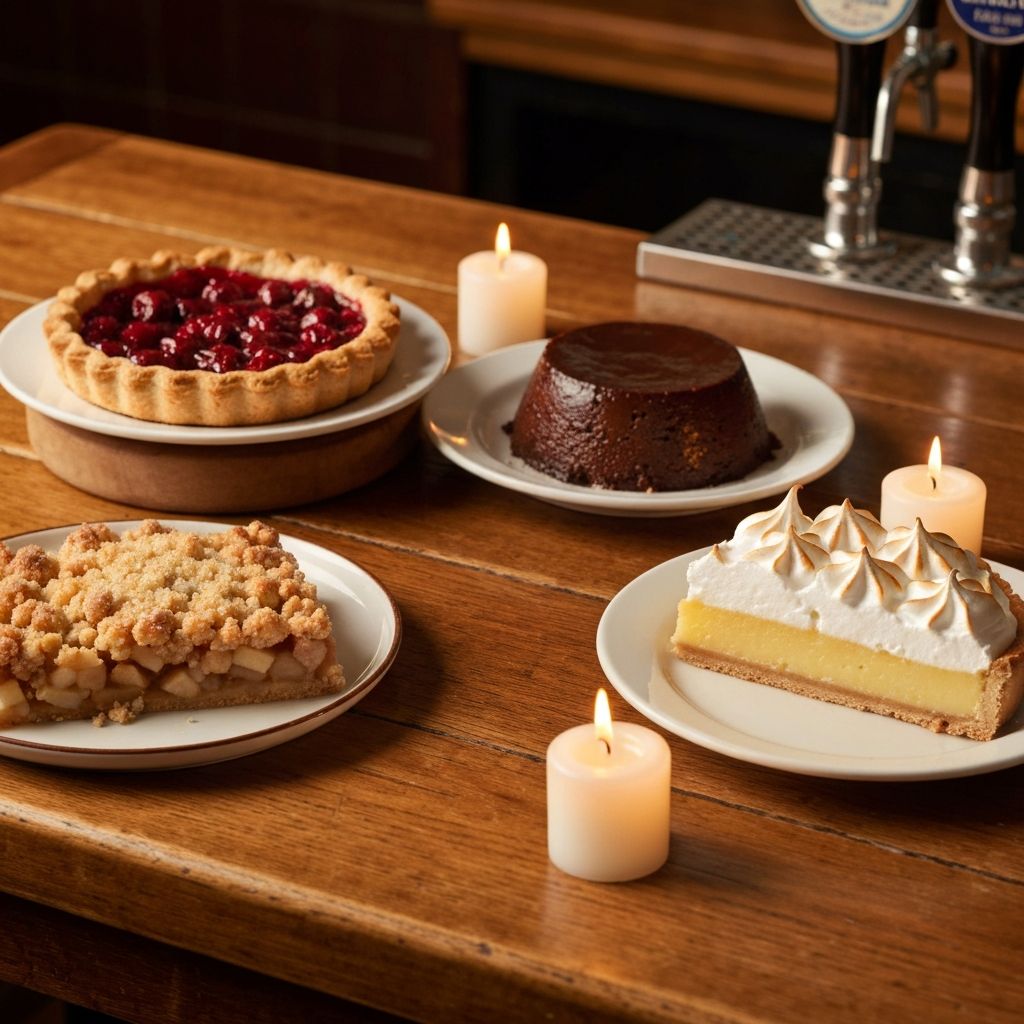
British pub and restaurant dessert menus feature traditional options that reflect British culinary heritage. These range from warm fruit-based puddings to creamy custard-based dishes and baked goods.
Typical dessert categories include:
The method by which food is prepared significantly influences its final energy density and nutritional composition. Understanding these differences provides context for the range of options available in pub and restaurant settings.
Key preparation methods include:
For example, the same protein (such as fish or chicken) prepared by different methods will have different energy densities. A grilled fish fillet will contain significantly less energy than a battered and deep-fried version, primarily due to the amount of oil absorbed during frying.
Public health guidance in the United Kingdom, including the Eatwell Guide, provides general recommendations about balanced eating and food groups. This guidance recognizes various food categories and their roles in overall dietary patterns.
The Eatwell Guide illustrates food groups and their general recommended proportions: fruits and vegetables, starchy carbohydrates, proteins, dairy or alternatives, and foods high in fat and sugar consumed in smaller quantities.
Pub and restaurant meals can include items from all these categories. Understanding the typical composition of menu items—such as which preparations contain higher energy density, which provide protein, and which are vegetable-based—provides context for how these meals fit into general dietary patterns discussed in public health materials.
This information is presented in an educational context to explain how common menu items are characterized, not as personalized guidance for individual choices.
Exploring the differences between grilled and battered fish preparations and their impact on energy density and composition.
Read more →
Understanding how vegetables are presented as sides and main courses in typical pub and restaurant offerings.
Read more →
Examining chips, mash, rice, and bread and how their preparation methods affect energy density.
Read more →
Overview of common sauces and dressings used in British pub cuisine and their compositional impact.
Read more →
Exploring the components of traditional British roast dinners and how they combine to create complete meals.
Read more →
Understanding traditional and contemporary dessert offerings in British pub and restaurant menus.
Read more →Energy density refers to the amount of calories (kilocalories) per unit of food weight. Foods high in fat are more energy-dense than foods high in water or fiber, as fat provides 9 calories per gram compared to 4 calories per gram for carbohydrates and protein. For example, grilled chicken breast has lower energy density than the same weight of fried chicken because frying absorbs oil.
Cooking methods influence energy content primarily through added fats. Grilling, boiling, and steaming add minimal or no fat, resulting in lower energy content. Deep-frying immerses food in oil, which is absorbed by the food, significantly increasing energy content. Roasting and pan-frying use moderate amounts of fat. Even boiling increases energy slightly if the food is cooked in salted water that is then absorbed or if butter is added later.
Macronutrients are the three main nutrients that provide energy: carbohydrates, proteins, and fats. Carbohydrates and proteins provide 4 calories per gram, while fats provide 9 calories per gram. Different foods contain different ratios of these macronutrients. A meal with significant protein (such as grilled steak) has a different macronutrient profile than a meal based on starchy carbohydrates (such as chips alone). Understanding these differences provides context for how menu items are composed.
Energy intake is determined by both the energy density of food (calories per weight) and the portion size consumed. A standard portion of chips contains more total energy than a standard portion of leafy greens, both because chips are more energy-dense and because they are typically served in larger quantities. Restaurant portions vary by establishment, influencing the total energy contribution of any dish.
Grilled food is cooked directly over or under heat, with fat applied sparingly or not at all. Fried food is either shallow-fried in a pan with a small amount of fat or deep-fried by immersing in hot oil. Deep-fried food absorbs significant amounts of oil, increasing energy density. The same protein item grilled versus deep-fried will have substantially different energy content, with deep-fried versions containing more energy.
Chips are potatoes that have been cut and deep-fried in oil. While chips from different establishments may vary slightly in thickness, cooking oil used, and salt content, the fundamental preparation is similar: potatoes absorb oil during frying, resulting in higher energy density than boiled or baked potatoes. "Thicker" or "crinkle-cut" chips absorb more oil than thinner fries, but the difference is relatively small compared to the overall energy contribution of the frying process itself.
Salad dressings vary greatly in composition. Oil-based dressings (such as vinaigrette) have high energy density due to oil content. Cream-based dressings (such as ranch or blue cheese) are even higher in energy due to cream and mayonnaise content. Even a modest amount of dressing can contribute significant energy to a salad. The type and quantity of dressing chosen dramatically affects the total energy contribution of a salad meal.
Accompaniments—such as sauces, dressings, condiments, and side dishes—significantly affect the total energy and nutrient content of a meal. A grilled protein may be lower in energy on its own, but when served with a rich sauce, buttered vegetables, and fried sides, the total meal energy becomes substantially higher. Understanding how components combine provides context for the overall composition of restaurant meals.
For detailed articles and deeper exploration of specific menu items and their characteristics, visit our blog section.
Continue Reading